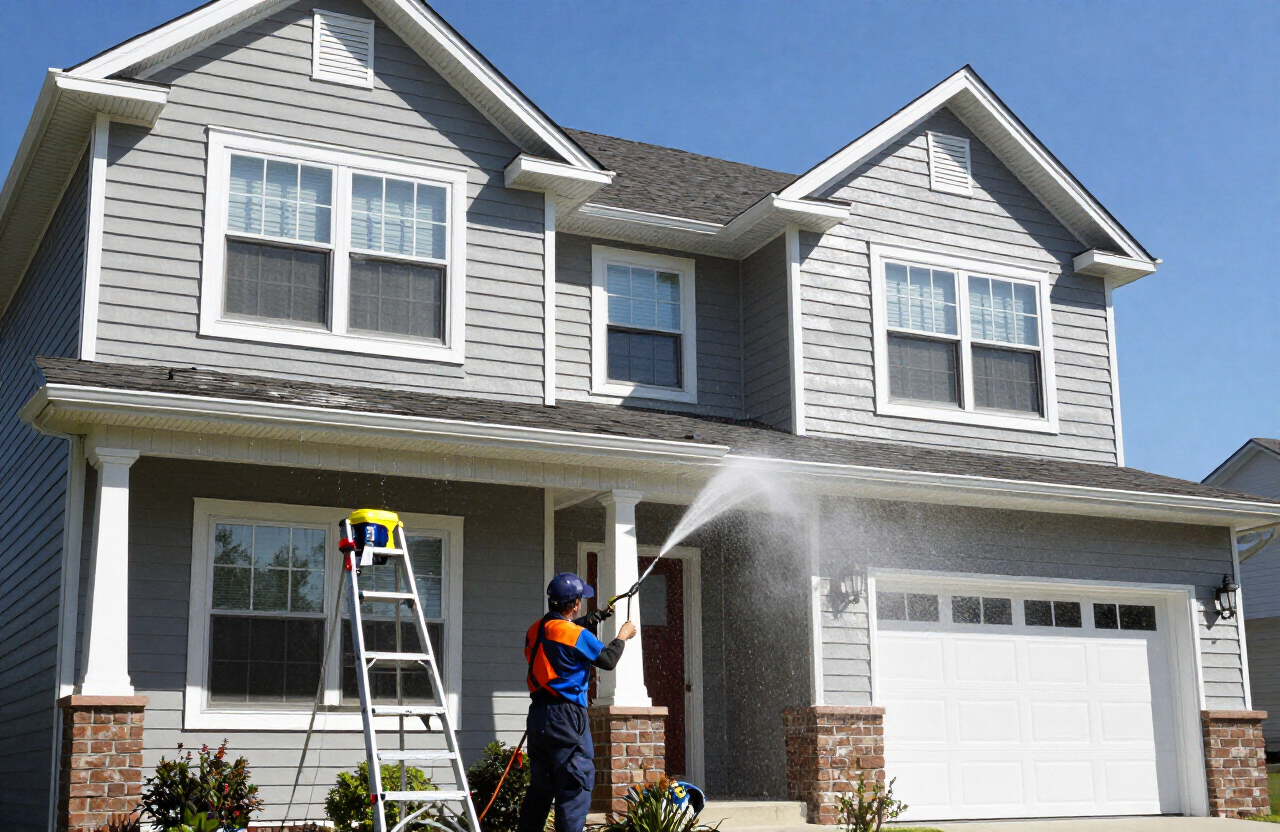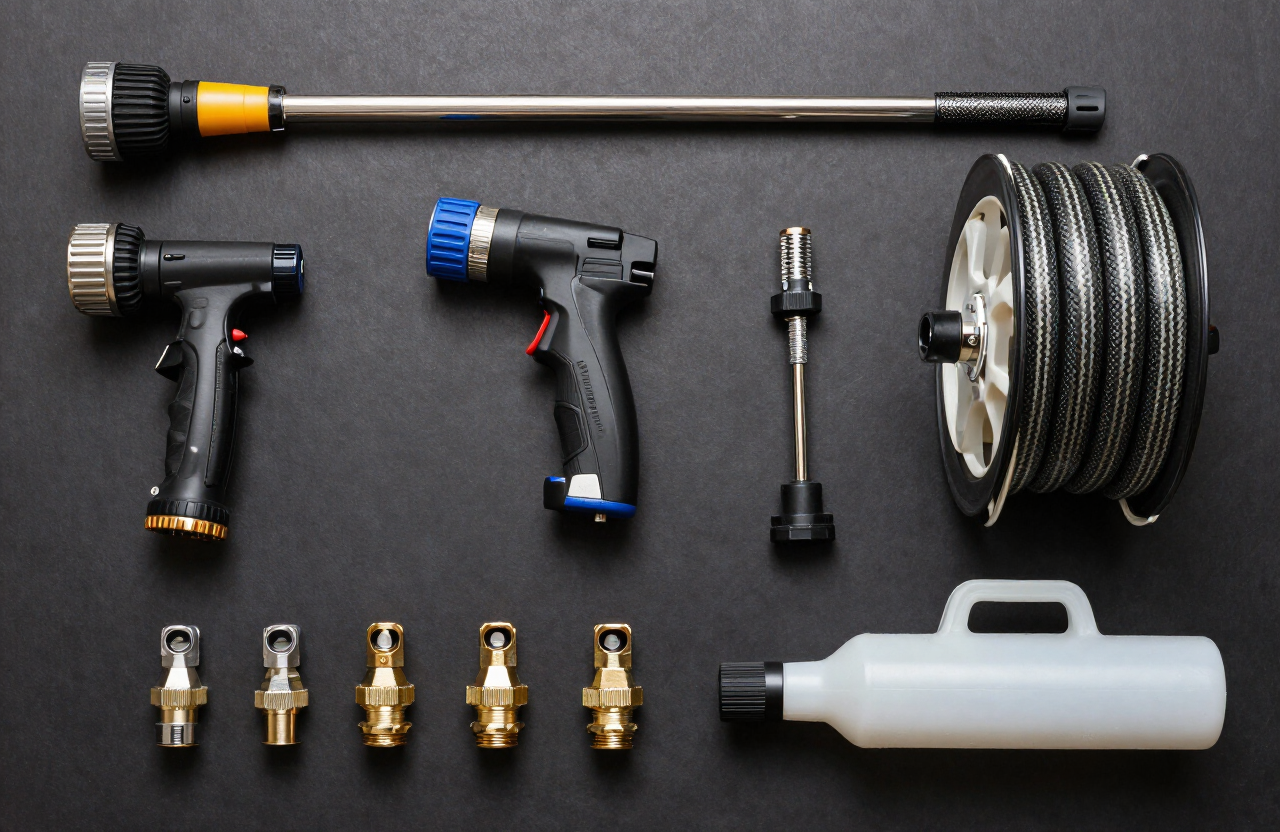
What pressure washing actually is
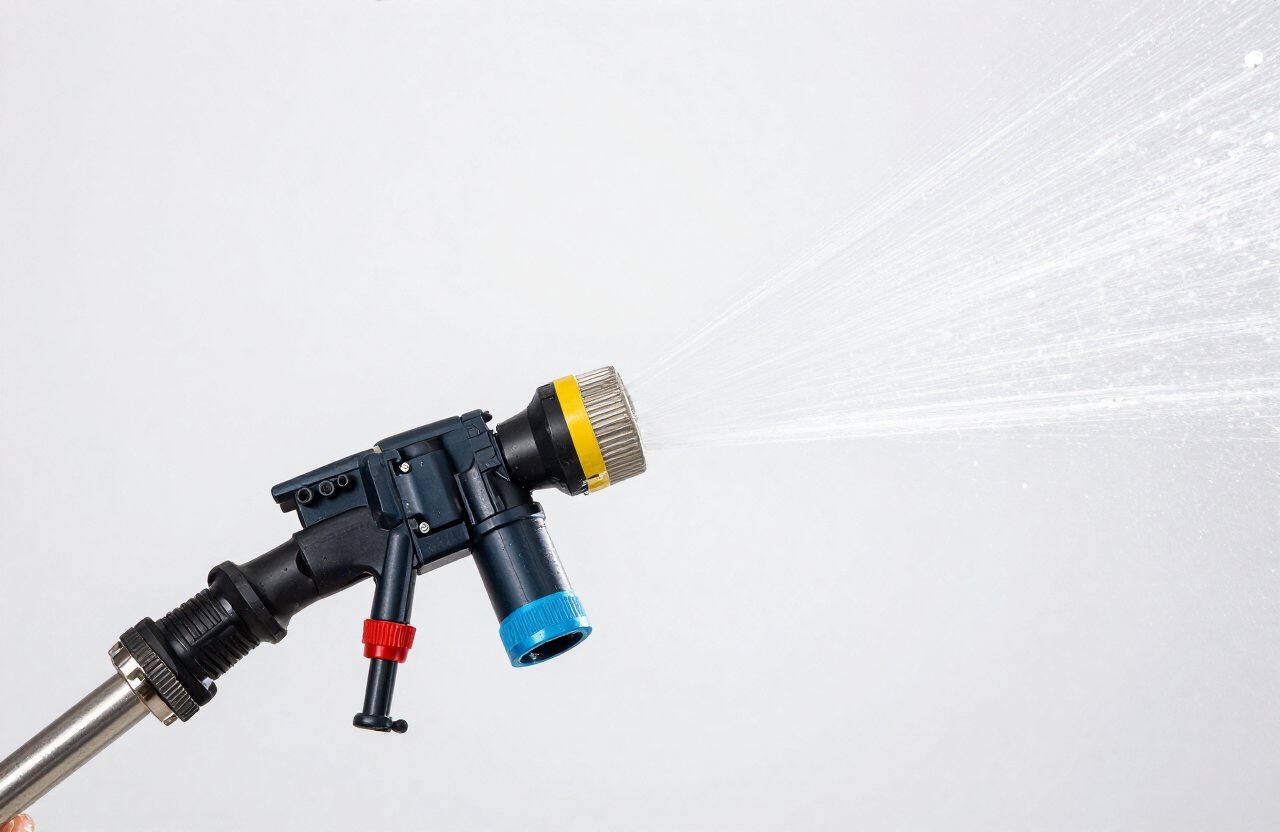
Pressure washing uses a motorized pump to push water through a narrow nozzle at high speed. The moving water carries enough force to lift dirt, algae, mold, and loose debris off hard exterior surfaces.
It is a cleaning method, not a magic eraser. The goal is to remove buildup safely without damaging the surface underneath — and that balance is what makes technique and equipment selection matter.
Pressure vs. volume: PSI and GPM
Two numbers describe any pressure washer: PSI (pounds per square inch) and GPM (gallons per minute). PSI is the force at the nozzle; GPM is how much water flows through.
High PSI with low GPM can etch a surface without actually rinsing the dirt away. A healthy balance of both cleans faster and more safely. For reference, many homeowner electric units sit around 1,500–2,000 PSI, while gas units commonly reach 2,800–3,200 PSI or more.
Quick reference
- PSI — how hard the water hits the surface
- GPM — how much water rinses it away
- Cleaning Units (PSI × GPM) — a rough combined power score
When to call a professional
Small, ground-level jobs on durable surfaces are reasonable DIY projects. Multi-story homes, delicate siding, roofs, and large commercial surfaces usually benefit from professional equipment and experience.
A professional can also read the surface — spotting oxidation, paint failure, or soft materials that high pressure would damage before the work starts.